


Whether you are buying your first home, or up-sizing or downsizing, here are twelve easy steps to buying a home- and how I can help you along the way.
-
Check Your Credit
Get with your mortgage person/bank (I have a list of brokers I deal with) , and have them check your credit before the process begins. Ask them to go over your finances to determine what kind of payments you can afford. Have them give you a good faith estimate. Have them include all the taxes and insurance on the NEW purchase price. Ask for a pre-qualification letter which many sellers request you have before you look at their homes.
-
Find a Good Realtor
When I work with a new client I show them my results and testimonials. Beware! Your friends and family may have someone in mind, but you want a full time agent who has experience, and who will be there for you when you need them to be. Moving to a new city? Ask your former Realtor to help you find a new Realtor in your new town. This is called a referral, and I would be more than happy to do it for anyone moving out of town. Remember, there should be no cost at all for you to have a buyer's agent representing you. That cost is picked up by the seller so why shouldn't you utilize a professional like me to help you with your search?
-
Make a List
Start your search by sitting down and determining your daily lifestyle. I ask my new clients to make a list. For example: Do you work from home? Like to cook? Need a wall for a gigantic flat screen TV? Is a pool a must? Write it down – Think of everything you would want to be in your new home. If you have kids let them be a part of the process- make it a family project! Start with everything you can think of that is important to you (you can always cut down the list later), and place items in order of importance. This process will help me help you.
- Start the MLS Search
Now this part really depends on how involved you want to be in the process. You can begin looking at homes on the internet, or leave the work to me. Either way, you will become educated on what is available in your chosen market area, and what is actually going on in the market. Pay close attention to how long a home is on the market, which ones sell, and for how much.
-
Look at as Many Homes as You Feel Comfortable
Look until you find the right one for you. A good Realtor should never "sell" you on a home. The Realtor is there to present properties. There may be something quirky about a house that you like...or that you cannot live with. Don't rush it. After all, if I am your Realtor I am going to want you to be happy because I want you to refer me to everybody you know.
Get to Know the Market
When you have found one or two homes you really like, sit down with your Realtor and get the facts. I like to double check a number of small items that sometimes others forget to do. For example, does the square footage of the home listed in the county records match what the seller is representing the sq ft. to be? Make sure you have a good understanding of what homes have been selling for in the area, how many days have they been on the market, and what were the features from one home to the next. Get to know the market.
-
Make the Offer
Some home prices have a "cushion" built in so that a spirited negotiation can take place between buyer and seller. Others are priced very close to what the seller wants (or needs) to be able to close on the deal. Don't assume that each offer should be a set percentage off the asking price. When I am preparing an offer for a client, I look at a number of things including how long the home has been on the market, what does the seller owe on the property still, what homes have been selling for in the market etc. I am a tough negotiator but I always try to remember that everyone in the transaction feels like they win. There is no reason to get emotional. Hopefully, you and the seller will come to terms with a price that works....if not, there are other homes. If you feel strongly about a certain property, make sure you are not so rigid that you walk away over something that might not be that big of a deal in the long run. Put your faith in your Realtor... he should be a pro who specializes in bringing buyer and seller together with terms they can both agree on.
-
Home Inspection
Once your offer is accepted have a certified home inspection done even if you are buying a property "as is". The inspector is trained to see past the paint and frills. Regardless of the terms, Florida law states that a buyer can walk away from the deal if there is anything wrong in the home based on the results of the home inspection. I like my buyers to feel comfortable going into the final stretches of the process and a home inspection usually does the trick.
-
Appraisal and Final Paperwork
Your lender will order any surveys or appraisals that you will need. At this point the lending officer will be looking over your file to determine if everything is in order. Since an appraiser can be assigned from anywhere in the state to determine the value of the home you are purchasing, I always always always meet with the appraiser personally....whether I represent the buyer, the seller, or both...to make sure they understand the value of the property. The sooner you get a commitment from the bank the better off you are.
-
Week Before Closing
Be sure to lock in your home owners insurance- you cannot close on any property without insurance in place. I have a list of agents that I work with that I can provide for my clients. Also, call to have utilities turned on or transferred into your name. I give a list of all service providers and their phone numbers to my clients so they can get in touch regarding power, cable, internet, gas (if necessary) etc.
-
Day of Closing
I insist that we have a final walk-thru on the day of closing. We want to make sure that the home is in the state it was at the inspection, and that everything is in order. At this point I make sure the seller has provided us with all receipts of the work that we agreed in writing previously has been done to buyer's satisfaction. Also, might sound strange...but we want to make sure the sellers have moved out before you move in! Sometimes you won’t know the exact amount of money to bring to the closing until the morning of the closing. We will check with your lender for that amount so you can have a cashiers check drawn at your bank. There is no point in doing this earlier than the day of closing because that final figure can change (even if it is ever so slightly) up until the time of closing. Don’t panic, no one can do this without you there. By this time I have already reviewed your pre- HUD statement, making sure that you are not being over charged for anything and that everything looks in order. We want to avoid any "hiccups" when we get to the title company office. I make sure that I have all the keys, garage door openers, manuals, warranties, and service providers such as lawn care people, pet groomers etc. so that you are ready to start enjoying your new home from day one.
-
After the Closing
Are you smiling? You should be. You have purchased the home of your dreams. If I can be if assistance, do not hesitate to call me with any questions whatsoever. If buying this home was a good experience please recommend me to all your friends and family :)
Pricing Your Home Too High. Why it Can be "Deadly" to the Selling Process of Your Home.
"I Want to List it High Because I Know Someone Will Offer Less"
When a seller interviews a real estate agent it's easy for them to get caught up in the excitement of choosing a sales price. If they can get more money for the home, it means more financial opportunities for the homeowner. Maybe it means they can afford to buy a larger, more expensive home, pay off some bills or take a vacation. Unfortunately, uninformed sellers often choose the listing agent who tells them they will list it at the highest list price. This is, by far, the worst mistake a seller can make.
Establishing Value
The reality is that it doesn't matter how much money you think your home is worth. The only person whose opinion really matters is the buyer who is going to make offer, and of course, the appraiser. Pricing a house is part science and part art. It involves comparing similar houses in similar communities, making the necessary adjustments for the differences between them, charting market movements and measuring the amount of housing inventory, all of this in an attempt to help determine a range of value. This is the same method appraisers use to evaluates a house. No two appraisals are exactly the same; they are however, generally close to one another. There is no hard and fast way to just stick a price on your home. If your Realtor doesn't present you with a thought out, well prepared CMA (Comparable Market Analysis) I would consider using someone else. It is a must have. If you feel that what you think you can get for your home is dramatically different from what your Realtor thinks, a good Realtor would suggest getting an independent third opinion from an established area Appraiser.
Is the Price Too Low?
Houses sell at a price a buyer is willing to pay and a seller is willing to take. If a house is priced too low the seller should expect to receive multiple offers and drive up the price up to the market value. There is not much danger in pricing a home under its actual value and your competition. The danger is in pricing it too high and haveing the house sit on the market for months.
How It Starts To Go Wrong
The seller of a home didn't interview her real estate agents. She pick the first agent off the Internet, or a friend, or someone else because, "He looked like a nice guy." The agent priced her house at $250k. After 90 days of sitting on the market, the listing expired.
It Continues To Go Wrong
The next agent she hired listed the house at $235k. Months passed and eventually she dropped the price to just under $220k, still no offers. A few people looked at the house, but no serious buyers came forward.
More Than a Year Later
By the time she hired the last agent list her house, the seller had grown exhausted and weary. It was now more than 12 months later. The seller and her agent then priced the home at $195k and it sold very quickly. The sad part is that the comparable sales in the neighborhood fully justified a price of $220k, but the home had been on the market for too long at the wrong price, and now the market had slowed.
Protect Yourself
The question is how much money an expired listings can cost a seller. The financial losses often exceed the extra mortgage payments and goes way beyond the cost of trying to keep you home spotless during the listing period. It affects the value that a buyer ultimately chooses to pay because it is no longer a "fresh" listing. It's now stale, dated, a home that was overpriced for too long. Don't let this happen to you. Don't be that seller of an expired listing. Be sure to hire a professional Realtor who will help you price your home correctly from the beginning. Your Realtor should have access to powerful tools that can help you determine the best list price for you house.
If you are thinking about buyer or selling a home in the Central Florida area or beyond, do not hesitate to get in touch with me and I will give you my expert opinion on your situation--- with no commitment and free of charge.
Filed Under
listings,
sellers
|
Leave a Comment

I was at a listing presentation last week in Winter Park and was asked to explain the difference between the two to my seller. He said it was helpful to him, so I wanted to pass it on to you....
The appraised value of a property is a professional estimate of a property’s market value. It’s based on the recent sales of similar properties, square footage, location, construction quality, and more. An appraisal varies in cost depending on the price and size of the home. Most lenders require appraisals as part of the loan application process.
But don’t confuse the appraisal with market value. The appraised value is a certified appraiser’s opinion of the worth of a home at a given point in time. And it should give you a pretty good idea what your home will sell for. Ultimately, though, your home’s market value is the price a buyer is willing to pay for it. Having your home professionally appraised before putting it on the market is one way to help you and your Realtor determine a fair asking price. There are other methods of determining the value of your home, including a comparative market analysis (CMA) which I can put together for no cost. A CMA compiles information and sales prices from homes similar to yours from your neighborhood that have sold recently. If you are considering putting your home on the market, or if you are interested in knowing what the value is to make a determination of what your next step might be...drop me a line and I can help you. No cost, no obligation.
Whether it be a CMA, an appraisal, or both, we will be able to price your home according to objective measures rather than a gut feeling or a number plucked from the air.
Filed Under
appraisal,
Articles by Michael Gonick,
CMA,
listings,
market value
|
Leave a Comment
I just don't think it is fair.
San Jose PLUS Palo Alto PLUS Santa Clara = Number 24.
And Chicago got to add Evanston to take it to #4.
Surely if we were allowed to add Daytona Beach to Orlando we would be able to jump up a notch or two. I hear they have some great high school football in Daytona.
Here is the top 50 courtesy of The Sporting News.
1. Pittsburgh
2. Philadelphia
3. Boston
4. Chicago + Evanston
5. Los Angeles
6. New York
7. Phoenix + Tempe
8. Miami
9. Dallas-Fort Worth
10. Detroit + Ann Arbor + Ypsilanti
11. Houston
12. Nashville
13. Atlanta
14. Washington
15. Tampa-St. Petersburg
16. Minneapolis-St. Paul
17. Raleigh + Durham + Chapel Hill, N.C.
18. Denver + Boulder
19. Salt Lake City + Provo
20. Indianapolis
21. Anaheim
22. Cleveland
23. Charlotte
24. San Jose + Palo Alto + Santa Clara
25. New Orleans
26. Milwaukee
27. Orlando
28. Baltimore
29. Cincinnati
30. St. Louis
31. San Diego
32. Portland
33. Oakland + Berkeley
34. Columbus
35. San Antonio
36. Toronto
37. Oklahoma City + Norman
38. Austin, Texas
39. Vancouver
40. Buffalo
41. Gainesville, Fla.
42. Calgary
43. Storrs, Conn.
44. East Lansing, Mich.
45. Montreal
46. San Francisco
47. Memphis
48. State College, Pa.
49. Kansas City
50. Jacksonville

House hunting? Be prepared with a pre-approved mortgage loan.
Many home buyers miss out on one of the most important steps in the home buying process. No matter what type of real estate market, a good Realtor will tell you that it is a good idea to be pre-approved for a mortgage loan before the house hunting begins.
A pre-approved mortgage loan is a lender's actual commitment to lend to the home buyer, with specifications on the exact loan amount. To become pre-approved, consumers must provide personal financial information, such as income, debts and assets, to an underwriter. After a home buyer applies for the loan, the lender will most likely approve the application with certain caveats. As the lender is committing to the loan amount and interest rate up front, the buyer knows they have their financing in place before begin shopping for a home. Advantages of having a pre-approved mortgage loan include:
Establishing an advantage in a competitive market. A pre-approval letter gives you an edge in a multi-offer situation. Sellers prefer working with potential buyers who are pre-approved; they do not want a deal to fall through because the purchaser cannot get sufficient financing. An offer with a mortgage pre-approval letter carries far more weight than an offer with only a pre-qualification letter or no letter at all. In fact, sellers often accept offers of lower dollar amounts from pre-approved buyers over buyers who have not been, despite higher offers. With pre-approval, the home sellers are more confident the deal will go smoothly.
Finding the best possible type of loan. Working with a mortgage agent before looking at houses would give you plenty of time to decide what category of mortgage product works best for your financial goals. Once you decide on the kind of loan you want and you are pre-approved for it, you then focus with your Realtor (pick me!) on finding your dream home.
Establishing the price range. Getting pre-approved for a mortgage enables you to determine, prior to house hunting, how much money you qualify for, thereby establishing a price range. You and your Realtor can then focus on looking at appropriate homes.
Seeking comfort with the loan amount. By taking the time to seek pre-approval, you select a comfortable loan amount. In many cases, buyers may qualify for mortgages that are more expensive than what they feel comfortable committing to for the long-term, merely because it works on paper. It is important for you to purchase a home you can afford.
I have a number of lenders that I have worked with successfully that I can put you in contact with if need be. Do not hesitate to get in touch with me about this...or anything else.
Happy New Year!
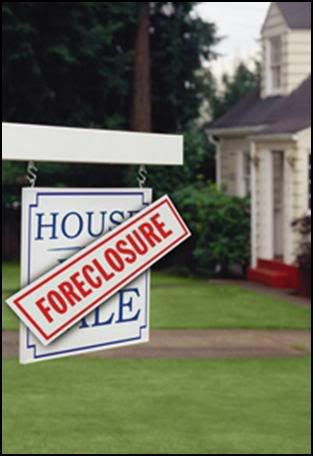
Foreclosure is a powerful buzz-word.
It seems like just about everyone who is in the market to buy a home right now wants one. But the simple truth is that a good portion of the remaining foreclosure properties here in Orlando aren't all they are cracked up to be. In other words, not always a great deal. Why? Well, first off many of the best deals have been bought up and the inventory of existing homes for sale is at the lowest level in over 18 months. A savvy real estate agent will look at foreclosures, bank owned properties, as well as all other properties for their clients to find every possible great deal out there.
So, what does make foreclosure homes so appealing? Perception of value. I mean, a home is being offered for sale for less for less than the current owner paid for it- therefore it must be a good deal....right? Well, this is not necessarily true. Each foreclosure should be evaluated on a case by case basis. For example, many homes have fallen into foreclosure after being occupied for only two or three years. And in that time frame a lot of buyers were getting 100% financing. There is more than likely a negative equity situation in that home. Compare that to a home which has been with the same owner for generations. It mostly has been paid off. Let's say this owner passes away and hands the property down to a relative who wants to unload it quickly. Chances are....the latter situation might provide the better opportunity for a buyer.
Foreclosures are not be for everyone. If the owner of a property in foreclosure is not making note payments....what are the chances the home is being maintained properly? Repair costs for updating, needed repairs and/or house abuse may push the price right back up. Granted, if you have hands on construction experience, a lot of patience (purchasing a foreclosed property can take a lot of time), vision and most importantly cash on hand- a foreclosed property might be right for you.
The bottom line on the bottom line. Good homes at fair prices are not on the market very long- whether it is a property in foreclosure or just a great deal. With the help of an astute Realtor you will have a leg up on others in the race to find the good ones fast. I have helped clients purchase foreclosure properties, and in other cases I have helped clients evaluate non foreclosure properties which are "move-in"ready". In many cases (I should say most), the non foreclosure property proves to be the better deal.
Feel free to test me on this. If you are interested in purchasing real estate fill out the information on my dream home finder and you will be mailed all the properties that fit your criteria as soon as they hit the market....automatically. This includes foreclosures and bank owned properties. Or get in touch with me and I can set this up for you.
Don't sell yourself short by only looking at properties in foreclosure. There may be a better deal waiting for you, with a lot less hassle.
Filed Under
Articles by Michael Gonick,
buyers,
foreclosures
|
2 Comments
Whether you have become a first-time homebuyer a few months ago, with flowers blooming around the yard and the promise of an $8,000 tax credit OR whether you have owned your home for years- with winter approaching, you may find yourself dealing with frozen pipes and clogged gutters that once upon a time may have been someone else’s responsibility. This primer will help you pick out the tools you’ll need to prepare for the challenges of the colder months. Yes....even Floridians need to be prepared!
1. Outdoor ladder
Even if you don’t plan on cleaning your own roof and gutters it’s important that you have access to these higher places in case of an emergency
2. Gutter scooper
You should clean your gutters at least twice a year, and a pre-winter unclogging is crucial to prevent potential rain or snow damage. All you really need is that ladder you bought and a reliable pair of gardening gloves to scoop out the leaves and goop.
3. Pruning shears/saw
If you have any large trees near your house, Be sure to remove any dead branches that are near the house or where people spend time outdoors.
4. Snow shovel
you probably want to add a snow shovel to your list of wintertime necessities. And if you wait to buy until that first snowflake falls, snow removal equipment may be harder to find.
5. Rake
To dispose of dead leaves.
6. Duct tape
The practical uses for duct tape are boundless, so it should come as no surprise that it’s also a practical way to seal the insulation for your water pipes.
7. Outdoor faucet cover
You’ll want to make sure any water pipes that are exposed to the outdoors are insulated, including any faucets, which are also known as exterior hose bibs.
8. Wet-dry vacuum
A wet-dry vacuum is certainly useful beyond the winter months, but it may come in especially handy when precipitation is falling and pipes run the risk of bursting. It will give you the ability to quickly clean up any leaks or drainage issues until you’re able to fix the problem for good.
9. Plastic window insulation
If you feel a draft when you sit near a window, you’ll want to put storm windows high on your growing list of things to do. But until you’re financially ready to make that purchase, a suitable substitute is plastic window insulation.
10. Outlet and light switch gaskets
You may not think much cold air can leak into your house through outlets and light switches, but all the cracks and holes in your home can quickly add up in your winter heating bill. Every wall plug and every wall switch is a place where cold air can come in.Foam gaskets that fit inside your light switches and outlets are an easy and inexpensive way to block some of the cold air.
Have a great Holiday Season and stay warm.
Remember, Orlando Real Estate Matters!
Michael
Filed Under
weather,
winter
|
Leave a Comment


